Common Liver Diseases Liver Cancer
Hepatitis
| Viral Hepatitis
| Alcoholic
liver disease | Biliary
disease | Other/metabolic
diseases | Acute
liver failure
Liver Cancer (Hepatoma, HCC)
Liver cancer or Hepatocellular carcinoma (HCC)
is one of the commonest cancers in the world especially in countries
like India which have a high incidence of Hepatitis B infection.
Apart from Hepatitis B, it may be caused by other diseases that
lead to cirrhosis of the liver (see below) such as Hepatitis C infection,
and alcohol abuse.
Unfortunately, like many other cancers, liver cancer
may go undetected until a late stage. It is often brought to attention
by an ultrasound or CT scan done for pain in the upper abdomen or
another unrelated symptom. It may also develop in a person previously
known to have cirrhosis of the liver. Once suspected, Alpha feto
protein (AFP) is a simple blood test to confirm its presence. At
times, a malignant tumour in the liver may be due to a secondary
spread from a cancer elsewhere, commonly the large intestine. .
What can be done about it?M
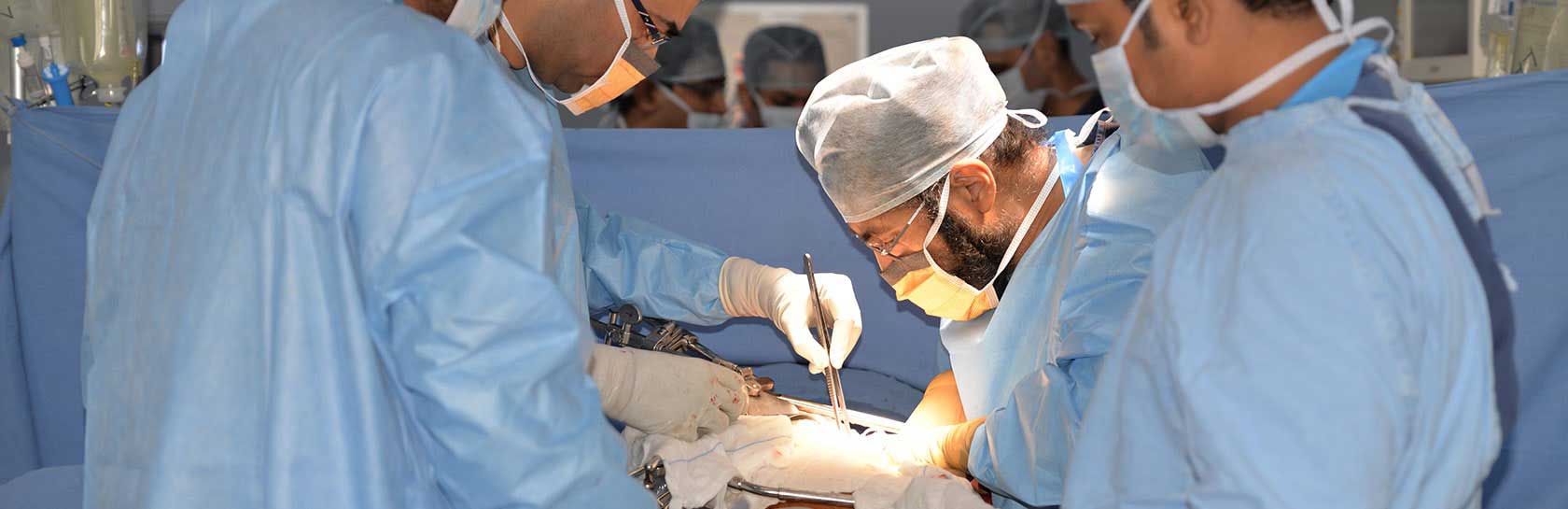
The best possible treatment a liver cancer is surgery wherein
the affected portion of the liver is removed ("hepatectomy").
Dr. Soin's Unit at Medanta Liver Institute are among the
teams with the largest experience of hepatectomy in India, performing
nearly 50 such operations annually with 95% success.. If surgery
is performed at a time when the cancer is confined to a removable
portion of the liver and has not spread elsewhere, there is a
high chance of cure. Traditionally, considered to be a high risk
surgery until 10 years ago, a hepatectomy can now be performed
with high degree of success in India, thanks to the bloodless
liver splitting techniques devised by surgeons. A combination
of low venous pressure anaesthesia, an experienced surgeon adept
at using a special machine called CUSA (see figure) along with
special tissue burning equipment can facilitate the division the
liver with hardly any bleeding. Two unique features of the liver
help in good recovery of patients. One is the tremendous reserve
due to which liver function remains normal even if upto 70% liver
is removed as long as the remaining liver is not diseased. The
second is the power of regeneration due to which the liver recovers
its original weight within few weeks after removal of up to 60-70%
of liver.
In some suitable cases, especially those where the liver has
cirrhosis along with cancer, liver transplantation is also possible.
This procedure can treat both liver cirrhosis and cancer at the
same time.
Treatment without operation
If an operation is not possible or safe, there are now several other treatment options available. Alcohol injection and radiofrequency thermoablation (RFA, burning the tumour with a special probe without operation) are two excellent options. Both these procedures destroy the tumour without any significant harm to the rest of the liver or the body and can be done on an outpatient basis without the need for admission to hospital. However, their major limitation is that they are only effective for cancers less than about 2 inches in size and fewer than three in number.
Injection of chemotherapy drugs through the liver
arteries (transarterial chemotherapy or TAC) can be done if the
cancer is widespread within the liver. This way the drugs are delivered
directly to the tumour greatly enhancing their effectiveness and
at the same time, markedly reducing their side effects on the rest
of the body.
Another method by which liver surgeons can deal
with large or multiple tumours that are confined to one side of
the liver is by blocking the blood supply of the cancerous area
of the liver with chemotherapy impreganted material (transarterial
chemo-embolization or TACE) resulting in death of tumour cells.
All above treatments can and should only be carried out in specialized
liver centres by experienced liver surgeons, physicians and radiologists.
Prevention of liver cancer is possible at two levels. The first level of prevention is to avoid alcohol abuse and to prevent the occurrence of Hepatitis B or Hepatitis C. These are acquired from infected individuals via blood or rarely other secretions, by sharing of infected needles among drug addicts, or by the sexual route. Their transmission can be avoided by use of disposable needles in hospitals, by strict and universal screening of all blood donors in blood banks and refusing donations from infected persons. The spread of Hepatitis B can be curbed by universal vaccination of all newborns and the rest of the non-infected population.
The second level of prevention is in patients who
have liver cirrhosis. A significant proportion of them will develop
cancer. This can be avoided if they undergo a timely liver transplant
and the diseased liver can be removed. All those with cirrhosis
should see a liver specialist to find out if a liver transplant
is suitable for them.
Top