Liver Cirrhosis Treatment
What is it? | What
causes it | Symptom | Living
with cirrhosis(do's and don'ts)
What is liver cirrhosis and what causes it?
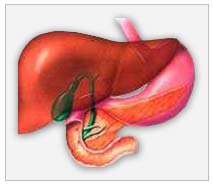
Normal Liver |
Cirrhosis implies irreversible scarring of
the liver which can be a potentially life-threatening. In
an advanced stage, 80-90% liver may be damaged and replaced
with scar (dead) tissue. Cirrhosis is caused by sustained
liver damage over several years either by alcohol, viral infection
(Hepatitis B, C), a toxic substance (for eg. drugs, excess
copper or iron in the liver), or by blockage of biliary system
such that the liver undergoes progressive scarring that slowly
replaces all of normal liver cells.
In most instances, the above causes initially
result in Hepatitis which can usually be treated. However,
if the offending factor is not removed or treated on time,
cirrhosis develops and then it is usually too late to change
the course of the disease.
Symptoms
of liver cirrhosis
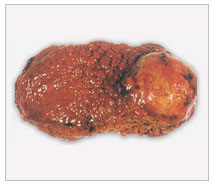
Liver with Cirrhosis |
Initially, there may general symptoms such as
tiredness, lethargy, yellowness of eyes and urine (mild jaundice),
swollen feet, excessive itching and anemia (low hemoglobin).
In more advanced stages, the patient may have several life
threatening complications such as blood vomiting, bloated
stomach due to water (ascites) in the abdomen which may develop
serious infection, mental deterioration and coma, deep jaundice
and kidney impairment.
In addition, the patient may have bleeding tendency
due to low levels of a liver protein prothrombin, and low
platelet count both of which are vital for normal clotting
of blood.
Living with cirrhosis (do's and don'ts)
Although cirrhosis implies irreversible damage to the liver, a person
with early cirrhosis (stage Child's A or early Child's B) can have
several years of fairly active life provided appropriate treatment
is given by liver specialists. Advanced or Child's C Cirrhosis on
the other hand, clearly dictates the need for a liver transplant
for which expert opinion should be sought.
- Intial detailed evaluation with a liver specialist is essential to grade the disease and chalk out appropriate therapy.
- Regular liver function tests and follow up with your specialist is necessary every 1-3 months in early cirrhosis and 1-4 weeks in advanced cirrhosis. The exact interval between check ups will be decided by your liver physician depending upon your symptoms and severity of disease.
- Nutritious diet is essential for optimal liver function in presence of chronic liver disease. Contrary to popular belief, the digestion remains normal until very late stages of liver disease except in the presence of severe jaundice. Hence, the need for complete avoidance of fatty food and proteins in all forms of liver disease is a myth. This is not only unnecessary in most cases, but also harmful since it results in malnutrition, weight loss and faster deterioration in health.
- In Hepatitis B induced cirrhosis, Lamivudine treatment may be considered in consultation with the liver specialist if HBV DNA test is positive
- In early cirrhosis due to Hepatitis C, treatment with Interferon-alpha and ribavirin may be useful in consultation with your liver physician.
- Alcohol must avoided at all costs in alcohol-induced cirrhosis and restricted in all other forms of cirrhosis, especially Hepatitis C.
- Excessive physical activity should be avoided especially in virus related cirrhosis.
- At the same time, forced bed rest should be avoided and reasonable degree of mobility and activity should be maintained.
- Contact sports should be avoided in advanced stages of cirrhosis due to poor clotting and a bleeding tendency.
- Self-medication is dangerous since the liver is suboptimal and drugs will have much more prolonged effects and may harm the already damaged liver.
Top